课题组在 Renewable Energy 发表光伏系统储能定容研究,提出基于能量分解的可靠性导向评估方法,将确定性结构错配与随机波动分离,并以保证率量化储能需求。
研究进展
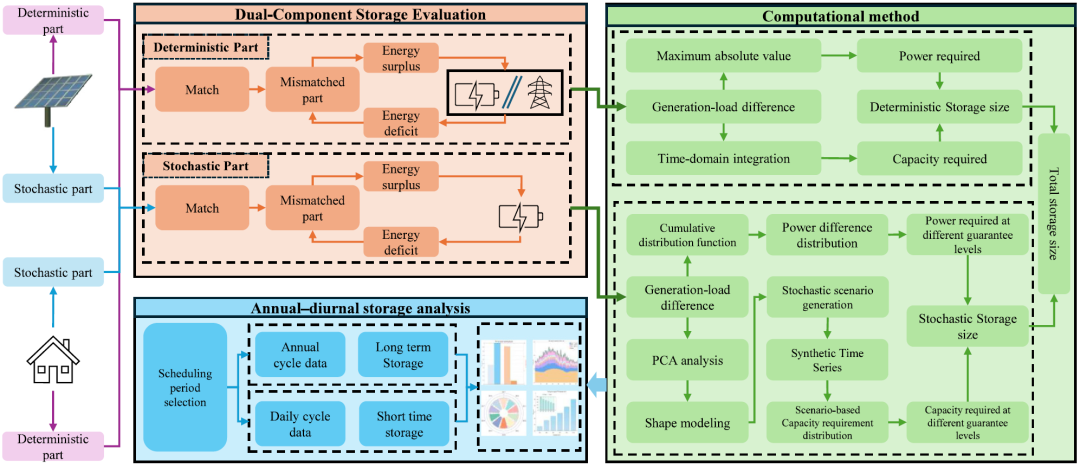
课题组在光伏系统储能定容研究中取得新进展,相关成果于 2026 年 4 月发表于 Renewable Energy。论文题为 A reliability-oriented energy storage sizing assessment method for PV systems based on energy decomposition。宁波东方理工大学与香港理工大学团队提出了一种基于能量分解的可靠性导向储能定容框架,将光伏发电与负荷波动拆分为确定性和随机性两类来源。
方法框架
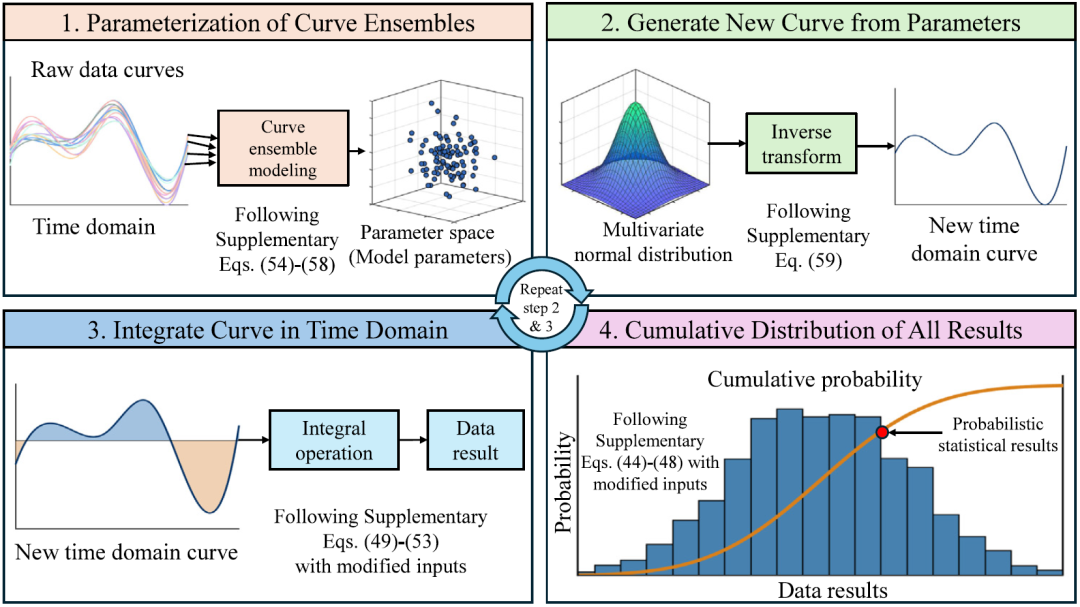
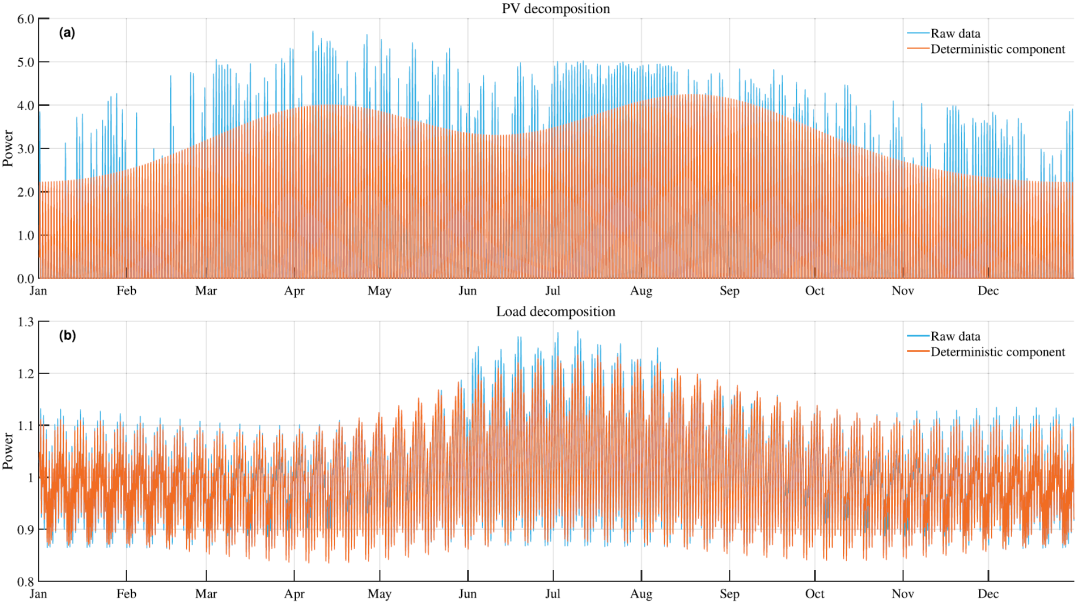
在确定性部分,方法提取光伏的太阳几何、昼夜和季节周期,以及负荷的日、周和年周期规律,用于刻画长期结构性错配形成的基础储能需求。在随机性部分,云层扰动、天气变化和短期负荷波动被纳入概率分析,并通过函数型数据分析得到随机功率和容量需求的统计分布。
研究进一步引入“保证率”概念,使储能定容不再只有一个单一结果,而是可以回答在 80%、95% 或 99.9% 等不同可靠性目标下,需要配置多少储能功率与能量容量。
关键发现
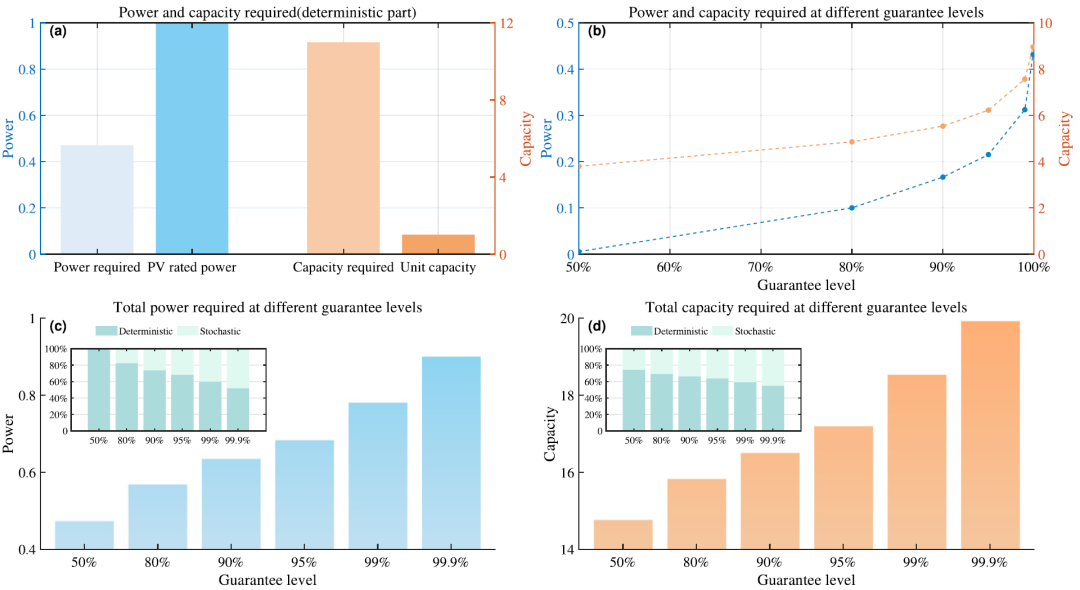
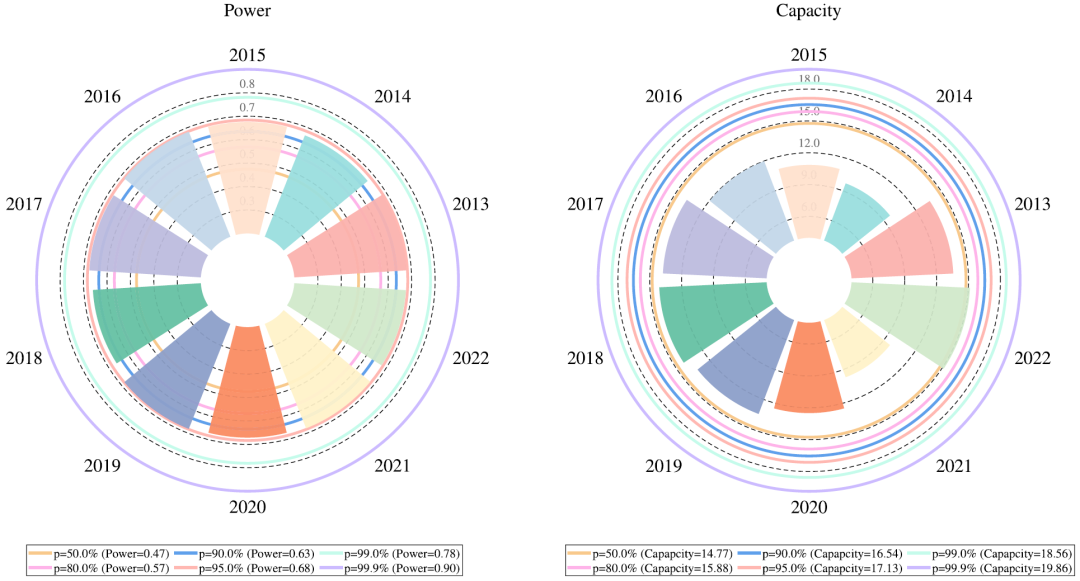
结果表明,在年尺度上,储能需求主要由确定性成分主导。在 95% 保证率下,确定性成分约占总功率需求的 68.5%,占总能量容量需求的 64%;即使保证率提高到 99.9%,其贡献仍超过 50%。
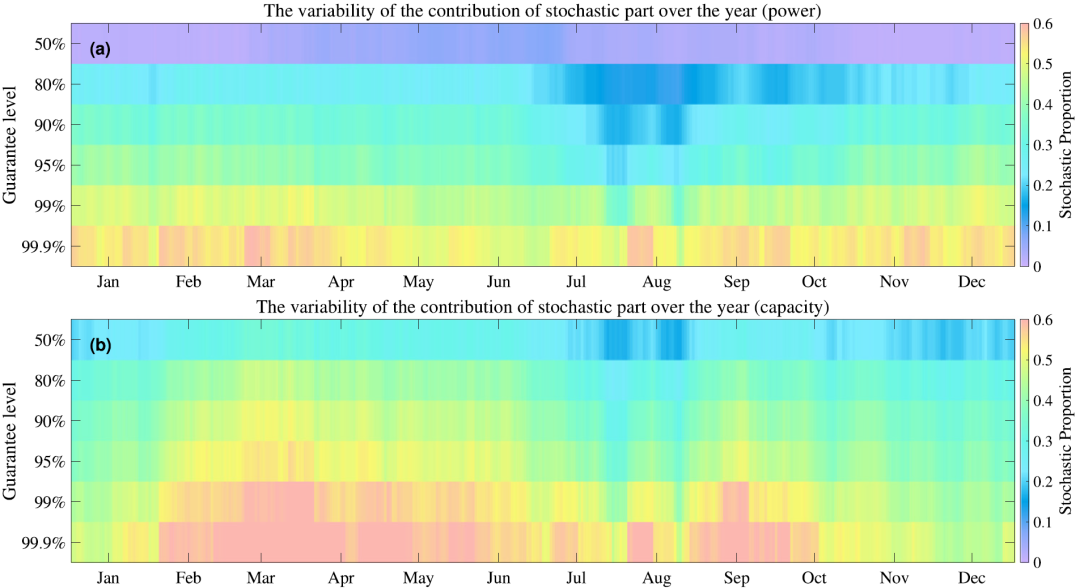
随着可靠性目标继续提高,随机性成分的影响迅速增加,高保证率区间的边际储能需求明显上升。文章指出,约 95% 的保证率可能在可靠性与经济性之间形成较合理的平衡。日尺度分析还显示出明显的季节变化:功率需求对发电和负荷的短时波动更敏感,而能量容量更多受发电总量与负荷总量的整体错配影响。
工程意义与展望
该框架把传统“黑箱式”的储能定容问题转化为可解释的需求来源分解,并将“需要多高可靠性”直接对应到“需要多大储能”,可为光伏电站、园区能源系统和分布式光储系统的规划与方案比较提供依据。
研究目前主要针对具有明确太阳辐照周期规律的光伏系统。对于风电等随机性更强、周期结构更复杂的可再生能源,仍需进一步扩展模型;结合储能成本、电价机制和投资回报的技术经济分析也是后续方向。
Research update
The lab has reported new progress in energy-storage sizing for photovoltaic systems, with the work published in Renewable Energy in April 2026. The paper, A reliability-oriented energy storage sizing assessment method for PV systems based on energy decomposition, presents a collaborative EIT–PolyU framework that decomposes PV generation and load variability into deterministic and stochastic sources.
Methodological framework
The deterministic component captures predictable solar geometry, diurnal and seasonal PV patterns, together with daily, weekly, and annual load cycles, thereby describing the baseline storage requirement caused by structural mismatch. The stochastic component represents cloud effects, weather variability, and short-term load fluctuations through probability distributions and functional data analysis.
By introducing a guarantee-rate concept, the method turns storage sizing from a single deterministic result into a reliability-dependent curve. It can quantify the storage power and energy capacity required for targets such as 80%, 95%, or 99.9% supply guarantee.
Key findings
At the annual scale, deterministic mismatch is the dominant contributor. At a 95% guarantee rate, the deterministic component accounts for about 68.5% of total power demand and 64% of energy-capacity demand; its contribution remains above 50% even at a 99.9% guarantee rate.
As the reliability target approaches very high levels, the stochastic component grows rapidly and the marginal storage requirement increases sharply. The article notes that a guarantee rate around 95% may provide a practical balance between reliability and storage cost. Daily-scale results also show clear seasonality: power requirements are more sensitive to short-term fluctuations in both PV output and load, while energy-capacity requirements depend more strongly on their aggregate mismatch.
Engineering relevance and outlook
The framework converts a largely black-box sizing problem into an interpretable decomposition of storage-demand sources, directly connecting a desired reliability level with the required storage size. This can support planning and comparison of PV plants, campus or industrial energy systems, and distributed PV-plus-storage configurations.
The current method is tailored primarily to PV systems, whose deterministic structure is closely tied to solar-radiation cycles. Extending the approach to more stochastic renewable sources such as wind, and integrating storage cost, electricity pricing, and investment-return analysis, are identified as useful directions for further work.